Residential User
17 Jul 2026
30 views
Mivan Construction: The Proven Method for Faster, Stronger, and Smarter Buildings
1. The Origins of Mivan Construction
If you’ve been around the industry long enough, you’ll know that most “new” construction methods have roots going back decades. Mivan Construction is no exception. The system was developed by a European company called Mivan in the late 20th century, originally to speed up housing projects where large numbers of identical units had to be built in tight timelines.
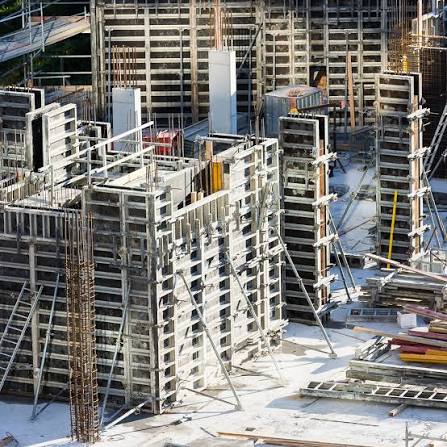
The idea was simple but brilliant — instead of relying on wooden or steel formwork that needed constant adjusting, create a lightweight, reusable aluminum formwork system that could be assembled quickly, locked in place, and then used again hundreds of times.
The method found early adopters in places like Malaysia, Hong Kong, and later India, where rapid urban growth demanded faster high-rise construction methods. Here in India, I watched Mivan really take off after the mid-2000s, especially in cities where developers were racing to deliver thousands of apartments in record time with the help of modern construction management software.
It was more than just speed, though. The consistent, smooth finishes from the panels meant less plastering and less time spent on touch-ups. In an industry where every day of delay costs money, that’s a big deal.
Bonus: Virtual Tours Powered by AI: Changing the Way We Explore Homes
2. Understanding the Mivan Process
Over the years, I’ve walked countless construction sites, and I can tell you — the magic of Mivan Construction isn’t in the pouring of concrete, it’s in the preparation. You don’t just show up and start.
Here’s how it typically works:
Step 1 – Panel Design and Fabrication
Before a single panel reaches the site, every wall, slab, and column is mapped out in detailed drawings. The aluminum formwork system is fabricated to exact measurements for the project. This precision is what gives Mivan its reputation for tight tolerances and consistent results.
Step 2 – Assembly on Site
When the panels arrive, they’re fitted together almost like an oversized Meccano set. Skilled crews assemble them so that they create a hollow mold for the concrete. Openings for doors, windows, and services are already planned and built into the mold.
Step 3 – Reinforcement and Concrete Pouring
Steel reinforcement bars are placed inside the formwork. Once ready, high-quality concrete is poured in — not in bits and pieces, but in one continuous operation that covers walls, slabs, and staircases together. This is what forms the monolithic concrete structure.
Step 4 – Curing and Removal
After the concrete sets (usually within 12–18 hours), the panels are carefully removed, cleaned, and stored for the next floor or section. Because they’re lightweight, handling them is faster and requires fewer workers compared to heavy steel forms.
Why it Works So Well
In traditional methods, you build walls first, then slabs, then come back for finishing. With Mivan Construction, you’re doing it all in one shot. That’s why timelines shrink dramatically. And because the surface finish is already smooth from the formwork, plastering is often minimal — just a skim coat in many cases.
3. Why Developers Are Choosing Mivan Construction
Over the years, I’ve sat in enough boardrooms and site offices to know one truth: developers chase certainty. They want to know how much it will cost, how long it will take, and whether the quality will satisfy buyers. Mivan Construction ticks those boxes better than most building methods I’ve seen.
For one, it shaves months off a schedule. I’ve seen projects that would normally drag on for 24 months wrap up in 14 or 15. That’s not just a time win; it’s a financial one. When you deliver early, you cut interest payments, reduce holding costs, and get to market before your competition.
It’s also easier to manage manpower. Instead of a scattered workforce doing bricklaying, plastering, and endless corrections, you’ve got a focused crew assembling the aluminum formwork system, pouring, and moving on. This makes scheduling cleaner and labour productivity higher.
And let’s not forget the buyers. Customers who walk into a Mivan-built home notice the difference — walls are straighter, finishes are smoother, and cracks are minimal even after years. For developers, that means fewer complaints and better word-of-mouth.
4. Technical Advantages of the System
If I strip away the business talk for a minute and look purely at the engineering side, Mivan Construction stands out for several reasons.
A. Monolithic Concrete Structure Strength
By pouring walls and slabs together, you remove the weak joints that occur in piecemeal construction. The result is a solid, joint-free mass that’s better at handling seismic activity and long-term wear.
B. Surface Finish Quality
The smooth aluminum panels give concrete surfaces that are nearly ready to paint. In some cases, you just apply a thin skim coat. That’s time and material saved right there.
C. High Reusability
Those panels? You can use them up to 200–250 times if you treat them right. That’s why Mivan Construction shines in large projects where the same floor plan is repeated.
D. Faster Cycle Time
Because you’re working floor by floor, a well-coordinated team can complete one cycle (assembly, pour, cure, remove) in just a few days. Compare that to traditional methods where walls alone can take weeks.